For many New York homeowners, the biggest obstacle to saving with solar is shade. In our experience, more than 30% of the properties we analyze are too shaded to qualify for solar incentives available in New York State.
A common question we hear from homeowners is whether you need to remove trees yourself before installing solar panels. The short answer is “no”. It depends on where the trees sit relative to where the panels are going to be installed, how tall they are, and how much shade they cast on the location of each panel array.
Below, you’ll learn exactly how shade can impact solar performance, how to spot which trees on your property could be problematic, and how to have your trees removed safely and affordably as part of a solar project.
Do Trees Really Impact Solar Panel Performance?
Solar panels rely on direct sunlight to perform at peak performance. Even light shade from a single branch can reduce solar production of a solar panel. While certain equipment like power optimizers or microinverters can mitigate shading losses, nothing replaces consistent sun exposure.
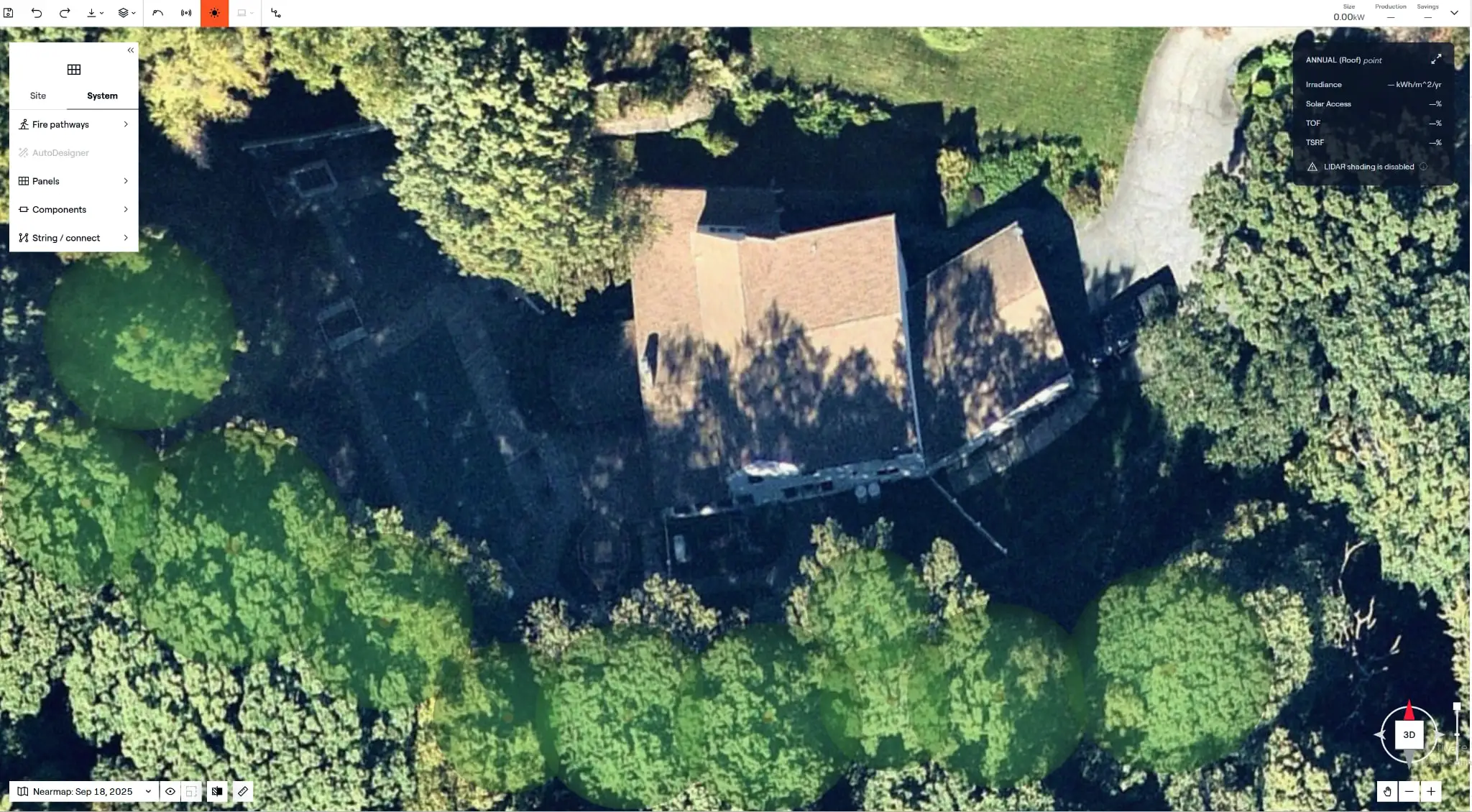
If not properly addressed, shade from nearby trees could wipe out a significant portion of your system’s expected output. The goal isn’t to remove every tree on your property but to carefully evaluate each tree and its actual impact on your home’s solar efficiency.
A qualified solar installer will run a detailed shade analysis during the design phase using aerial imagery and solar modeling software. That report identifies exactly which trees meaningfully reduce your solar potential and by how much.
How To Tell If a Tree Will Impact Solar Production
Not every tree on your property is a problem. What matters the most is orientation, height, and distance.
- South of the home: most impactful, cause the most shade because the sun moves through the southern sky during the day.
- East: can block morning sunlight.
- West: can block late afternoon/early evening sun.
- North: rarely cause shading issues unless branches overhang the roof.
A simple rule of thumb: if a tree is tall enough that it could hit your home if it fell toward it, it’s probably tall enough to shade it.
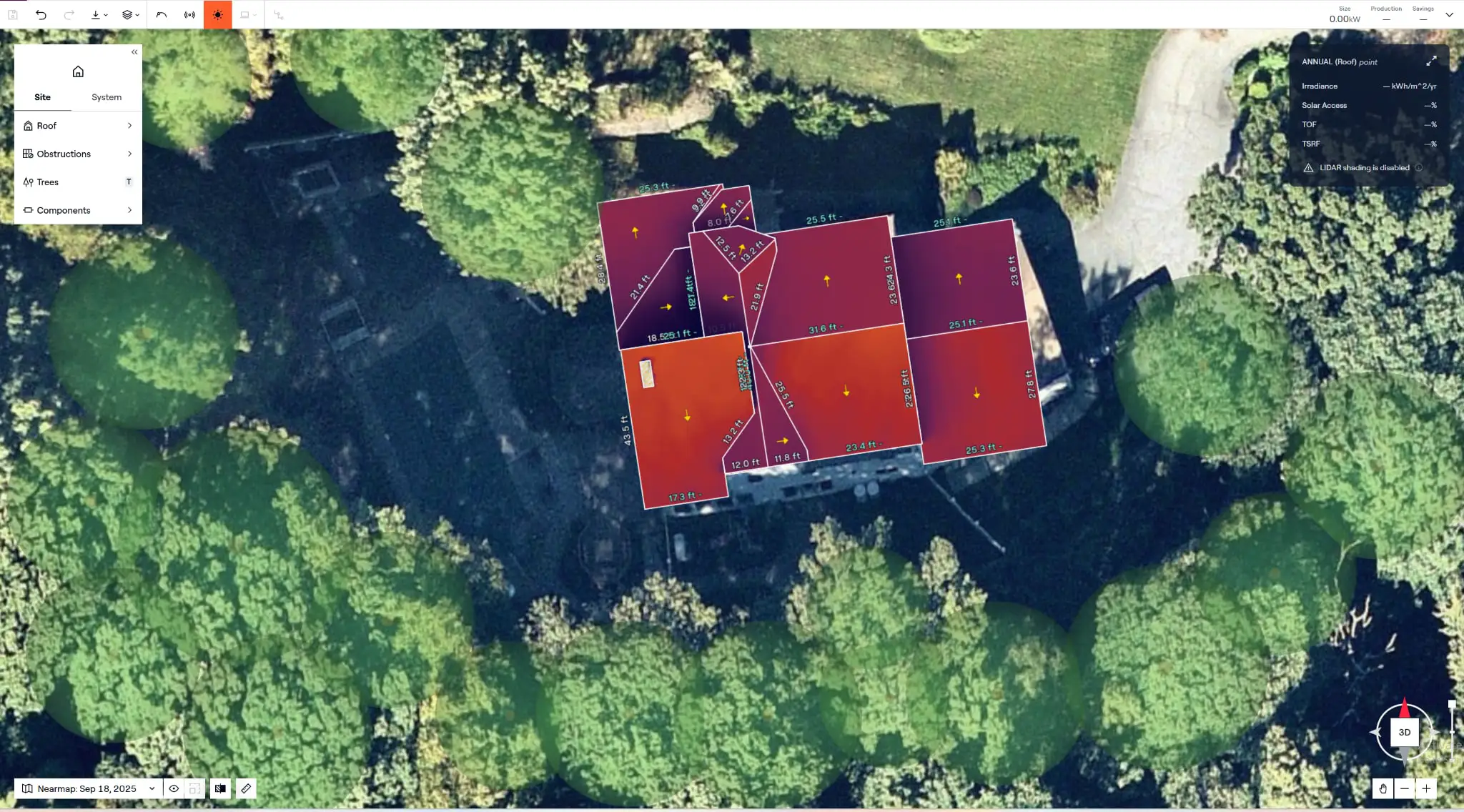
When we evaluate your roof for solar, we factor in these orientations, seasonal sun paths, and nearby obstructions to calculate annual shading. If a particular tree is blocking more than ~10-15% of the available sunlight, it may need to be removed to help your system perform at its full potential.
Do I Need To Remove Trees Myself?
It’s surprisingly common for solar companies to ask homeowners to remove their own trees. But this is where Empire Solar really stands out among the competition. We’ve coordinated well over 1,000 tree-removal projects for our customers.
Tree removal can be easily added directly to your solar project so everything lives under one contract and one schedule. We partner with trusted local tree services and because we provide them such a large number of projects every month, our customers often pay a fraction of what it would cost to hire a tree company separately.
By bundling the work into your solar project, you can also include the cost within your solar payment, allowing you to spread it out over time instead of paying up front. This means your solar savings will more than cover the cost of the tree removal and you don’t even need to come out of pocket for the tree work.
Why Combine Tree Work with Your Solar Project?
There are several benefits to having tree removal and solar installation handled together.
1. Financially efficient. When tree work is included in your solar project, you can take advantage of financing options and, in some cases, incentives that help offset the cost. That means your total project investment is lower than taking care of each project separately.
2. Simpler logistics. Combining solar with tree removal is also much easier to coordinate than you’d expect. Instead of coordinating multiple contractors, you’ll have one point of contact managing these projects from start to finish. Our team handles scheduling, permits and cleanup so your installation stays on track.
3. Better performance from day one. Combining both projects maximizes your system’s output from day one. Removing just one or two major shade producing trees can increase your energy production by 10-30% depending on your property. This completely offsets the cost of removing the trees and increases your savings by that amount many times over.
Common Concerns About Tree Removal
We understand that many homeowners are attached to their trees. They add beauty and privacy to your property and they can often hold sentimental value. The goal of upgrading your home with solar is to find the right balance between aesthetics and performance.
In many cases, removing just a single tree is all that’s needed to bring a home from being unfit for solar to being an ideal candidate. During your initial meeting with our team, we will show you exactly how much more power your system could produce with those adjustments so you can make an informed decision.
We also encourage homeowners to consider replanting smaller, low-profile trees that won’t grow tall enough to shade their panels in the future. This way you keep the natural look of your property while improving your home’s efficiency.
Bottom Line
You don’t need to remove trees yourself when you go solar unless you really want to. But either way it’s important to have an understanding of which trees matter and figuring out the simplest and most efficient way to have them removed. Trees to the north of your home will rarely impact production, but those to the east, west, and especially the south can have a major impact on your energy savings.
Empire Solar makes the process easy by managing everything for you, from the initial shade analysis to coordinating the tree removal process with our partners. By combining tree work with your solar project you save time, money, and ensure your system performs at its maximum potential.
See How Much Sunlight Your Roof Really Gets
Get your free Solar Savings Report & Shade Analysis. We’ll show you how much sunlight your roof receives, which trees may impact your system, and how to bundle any necessary tree work into your solar project for less than hiring someone yourself.