Quick Navigation: Top Inverters Comparison
When most homeowners think about going solar, they usually focus on the panels, comparing wattage, brands, and warranties. But one of the most important (and often overlooked) parts of any solar system is the inverter.
Your inverter is the brain of your solar setup. It determines how efficiently your panels convert sunlight into usable electricity, how your system performs in different conditions, and how easily you can monitor your energy production once it’s installed.
If you’re exploring solar for your home, you’ll likely come across three big names: SolarEdge, Enphase, and Tesla. Each takes a very different approach, and making the right choice can have a long-term impact on your system performance, reliability, and savings.
In this guide, we’ll break down:
- How each inverter works
- What sets them apart
- Which is best fit for your home and energy goals
- And one new option that’s changing the conversation completely
What Does a Solar Inverter Actually Do?
Solar panels produce direct current (DC) electricity, but your home runs on alternating current (AC). The inverter’s main job is to convert DC power into AC, making the energy your panels generate usable for your household. Without an inverter, the power from your panels would be useless.
Today’s inverters, however, do much more than just converting energy. They:
- Act as the communication hub for your entire system
- Track and optimize power production panel by panel
- Provide real-time system monitoring
- Shut down safely if there’s ever a grid outage
There are three main inverter types you’ll see today:
- String Inverters – all panels are connected in a single line and share one main inverter.
- Optimized String Inverters – each panel has a small optimizer that helps balance output, feeding into one central inverter.
- Microinverters – each panel has its own inverter, converting power independently.
SolarEdge, Enphase, and Tesla each use one of these setups, and that’s what defines their performance, reliability, and price.
SolarEdge: Optimized String Power
SolarEdge has built its reputation on blending efficiency and affordability. Their systems use a single central inverter paired with power optimizers mounted on each solar panel. These optimizers control the output of each panel individually while still relying on one main inverter to handle converting DC to AC.
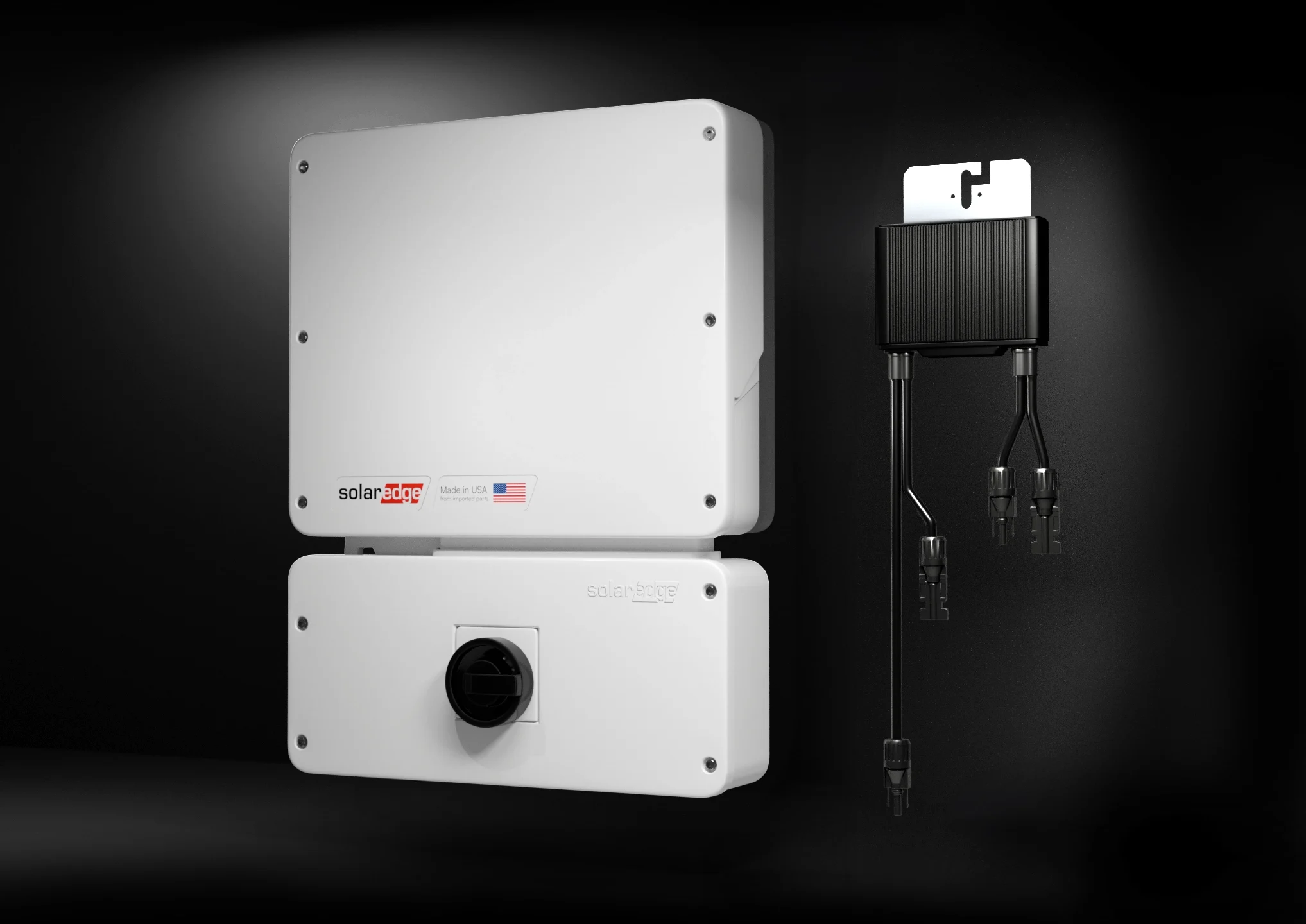
This design gives SolarEdge a clear advantage over traditional string systems. With optimizers in place, shade on one panel won’t drag down the performance of an entire array. This makes it an excellent option for homeowners with any shading or multiple roof planes facing slightly different directions.
SolarEdge also offers one of the most advanced monitoring platforms in the industry. You can view detailed per-panel real-time production data through the SolarEdge app, giving you a clear look at how your system performs throughout the day.
Another reason SolarEdge remains popular is its balance between cost and performance. It’s often priced lower than Enphase while still offering efficiency rates above 97%. That makes it a strong middle ground for homeowners who want the best performance without the premium price tag.
The main drawback of SolarEdge systems is that they still rely on a single central inverter. If that inverter fails, the system stops producing until it’s replaced. Power optimizers are also more difficult to service after installation since they’re attached to each individual panel.
Best for: Homes with minimal shading, open roof space, and homeowners looking for a balance of efficiency, monitoring, and affordability.
Enphase: Microinverter Technology
Enphase leads the industry in microinverter technology. Instead of relying on a single central inverter, every solar panel has its own microinverter that converts DC power into AC right at the panel.
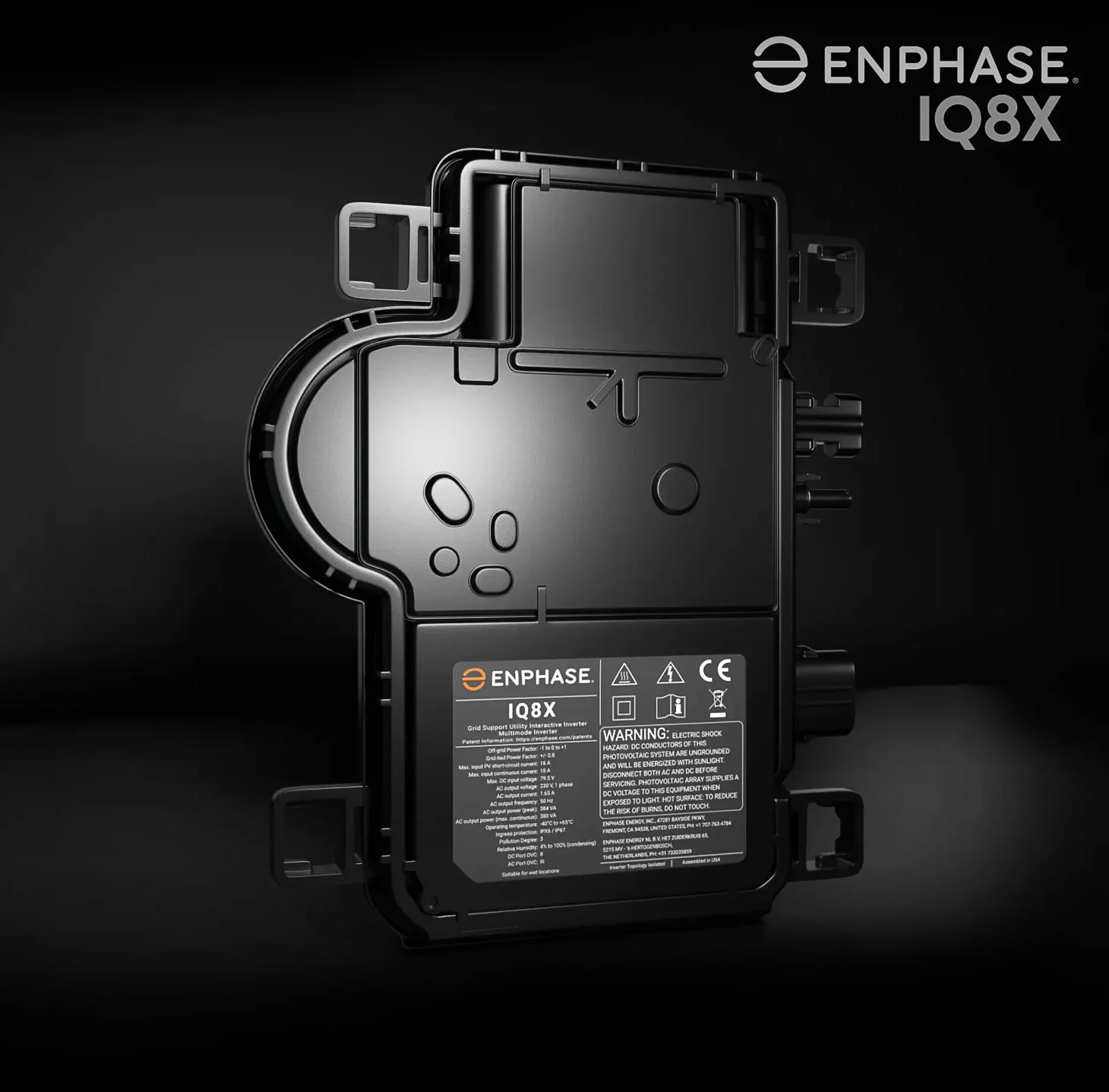
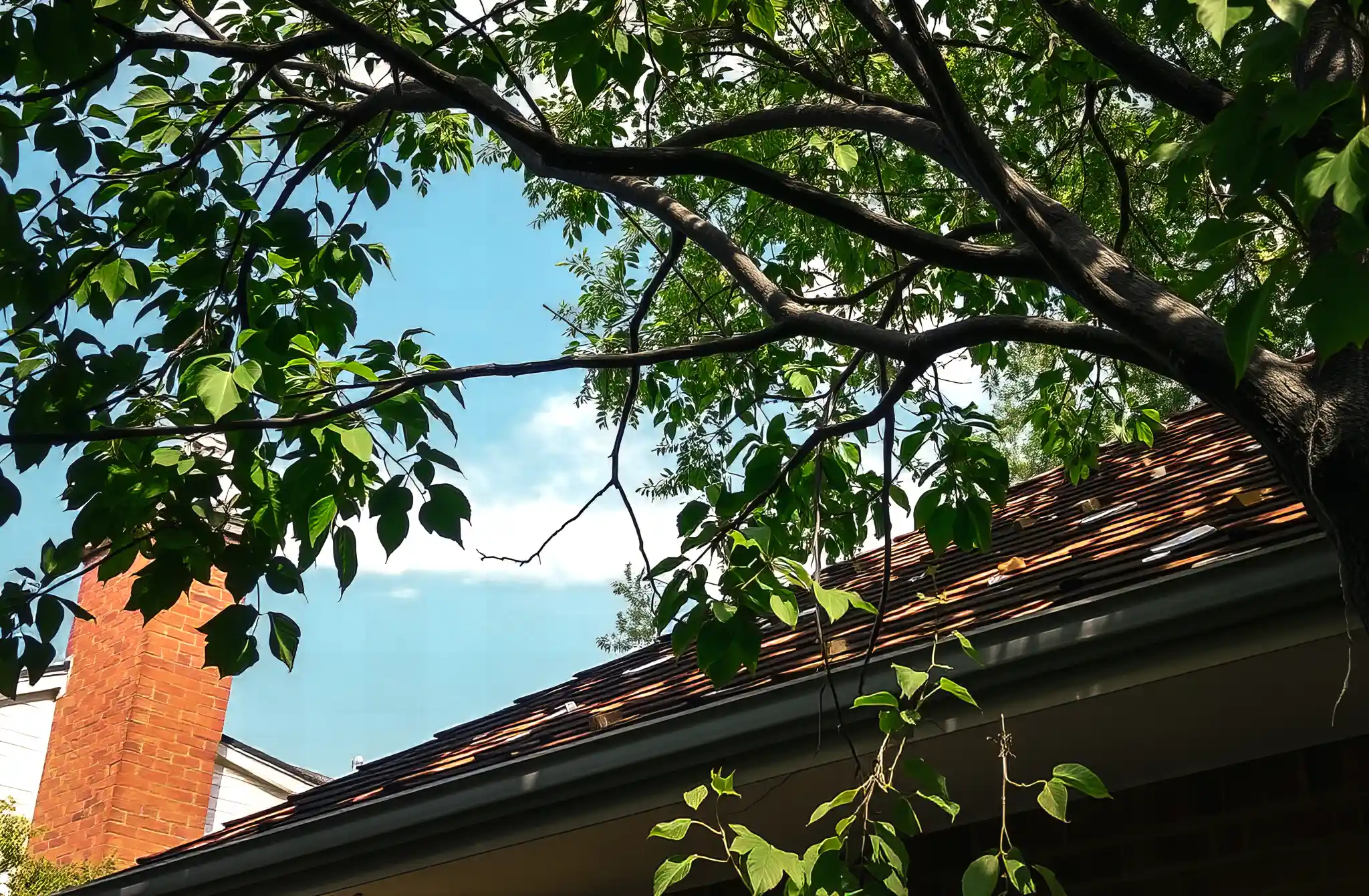
This design gives Enphase systems a unique advantage. Because each panel operates completely independently. This means that shade or debris on one panel won’t affect the others. This results in consistent production even on complex roofs or homes with shading obstructions like chimneys, dormers, or nearby trees.
Enphase systems also come with one of the best warranties in the industry: 25 years of coverage for both the microinverters and their monitoring hardware. Combined with their track record for reliability, it’s one of the main reasons Enphase systems are often considered to be the gold standard for residential solar installations.
If you prioritize visibility and control, the Enphase app delivers unmatched insights. It tracks real-time power output for every panel and battery performance, if you install their Enphase IQ Battery, allowing you to see exactly how much energy your home is producing and using at any moment.
However, microinverters are much more expensive to manufacture and install since each panel requires its own device. However, the payoff is long-term reliability and independence. If one inverter fails, the rest of your system keeps producing without interruption.
Enphase systems also integrate seamlessly with their IQ Battery, giving homeowners energy storage options that can be expanded later. This makes it one of the most flexible and future proof inverter systems available to homeowners today.
Best for: Homes with partial shading, multiple roof planes, or homeowners who value maximum reliability, and long-term performance.
Tesla: Streamlined Design and Smart Integration
Tesla’s inverter reflects the same philosophy as everything else they build: clean design, intelligent functionality, and long-term reliability. It’s one of the newest inverter platforms on the market and has quickly gained attention for its performance, monitoring capabilities, and ease of installation.
The Tesla Solar Inverter is compact and efficient, achieving high conversion rates of up to 97.5%, which puts it right in line with both SolarEdge and Enphase. It’s designed to work with all leading solar panel brands, giving homeowners flexibility without locking them into a single equipment manufacturer.
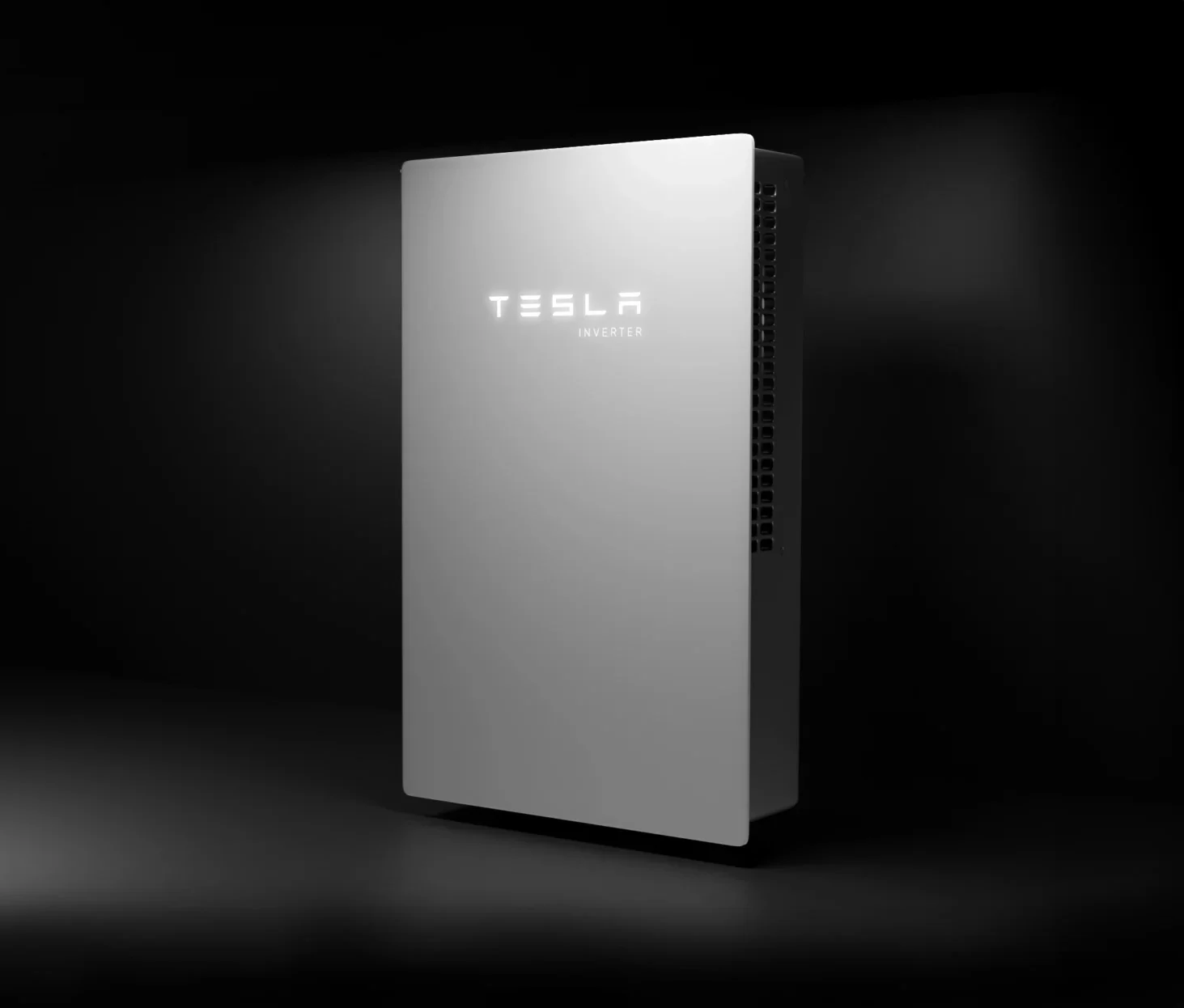
Where Tesla stands out is its smart integration and monitoring. Using the Tesla app, homeowners can monitor solar production, household consumption, and grid usage in real time, all from the same dashboard that connects to other Tesla products. The app breaks down data hour by hour and gives homeowners full control over how their energy is used and stored.
Tesla’s inverter is also built with convenience in mind. It automatically performs firmware updates through Wi-Fi, integrates seamlessly with Tesla’s cloud-based monitoring network, and includes advanced safety features such as rapid shutdown, arc-fault detection, and integrated ground fault protection. These systems keep both the homeowner and installers protected while ensuring the inverter performs reliably for years.
Another advantage of Tesla’s inverter is its installation efficiency. It has a simple, wall-mounted design with fewer external components, which speeds up installation and reduces potential maintenance issues. Installers can also remotely diagnose performance or update software, minimizing downtime if service is ever needed.
Tesla’s inverter comes with a 12.5-year warranty, which is considerably shorter than Enphase’s 25 year coverage, but the company’s track record for reliability and constant software improvements really does help close that gap.
Best for: Homeowners who want a sleek, high-efficiency inverter with intelligent monitoring, automated updates, and seamless integration into a smart home, future battery storage setup, or EV charger later.
Honorable Mention: Tesla Powerwall 3
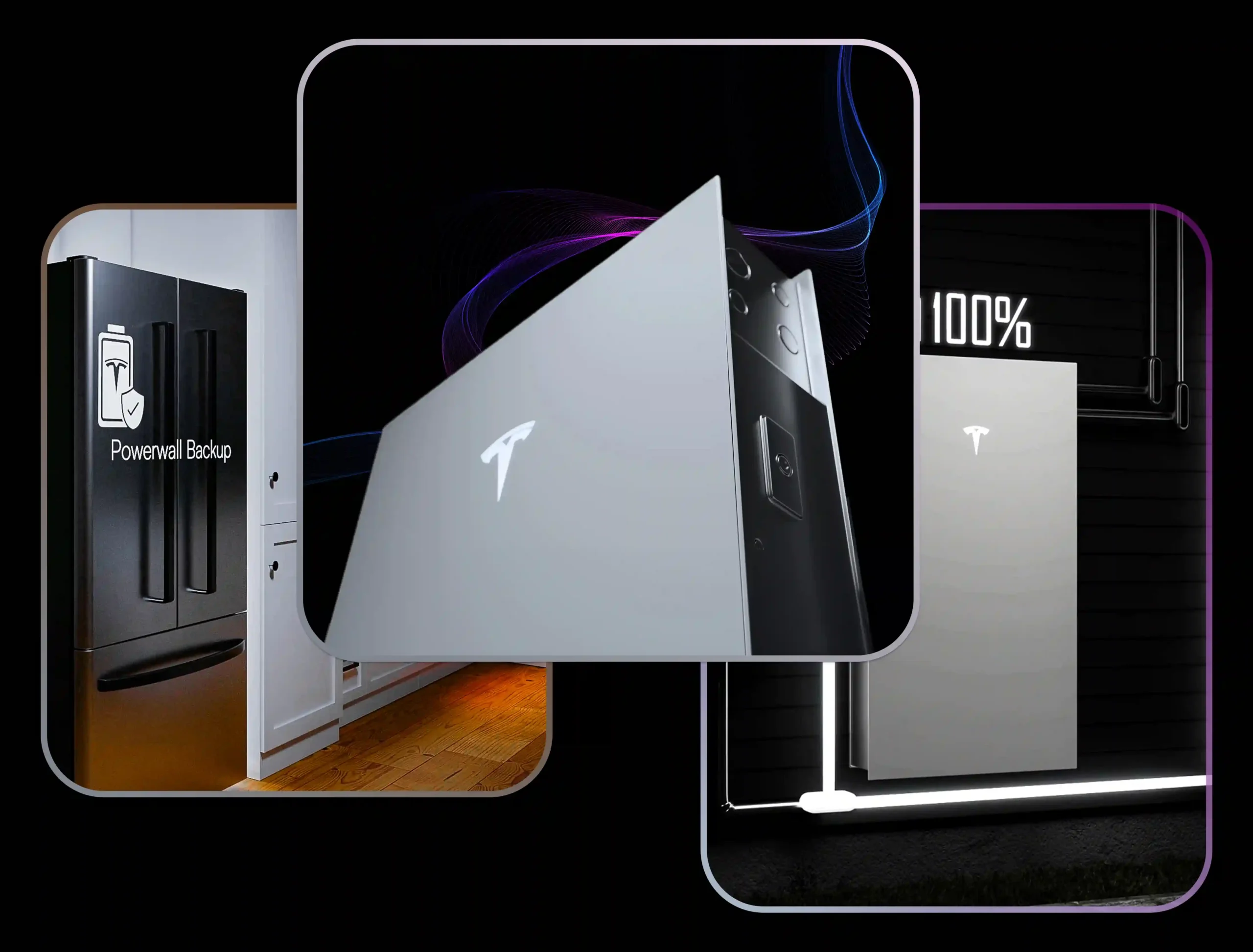
For homeowners considering solar with battery storage, the Tesla Powerwall 3 deserves special attention. Unlike earlier versions, this new model includes a built-in inverter, meaning it can directly convert solar power without the need for a separate inverter.
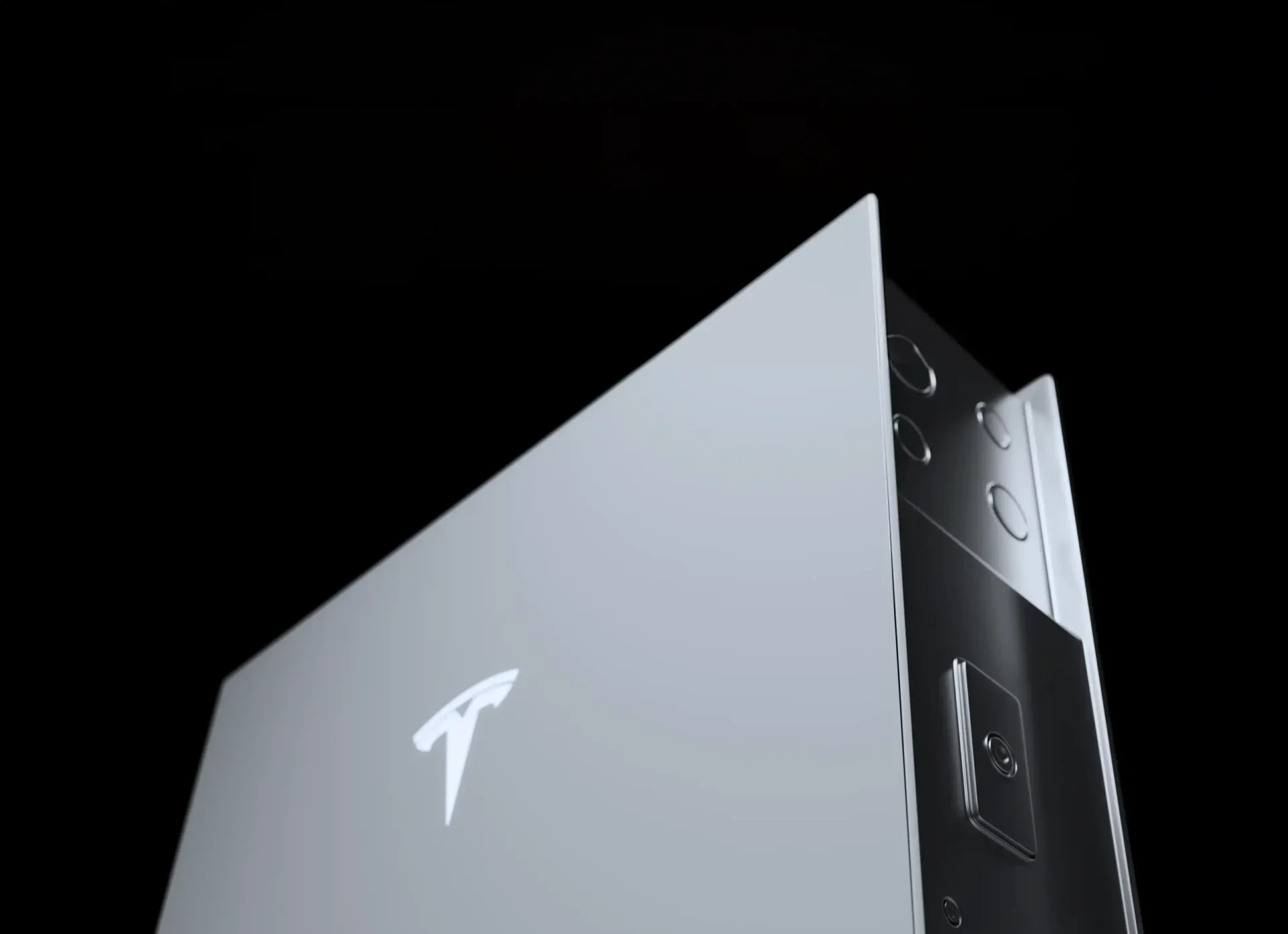
That design simplifies the system and lowers the overall installation cost. It also makes the Powerwall 3 a strong contender for homes that want both backup power and maximum efficiency. With 13.5kWh of usable energy and 11.5kW of continuous power output, it can run most essential home appliances during an outage and in some cases, the entire home.
The Powerwall 3 charges directly from your solar panels during the day, stores excess energy, and automatically powers your home when the grid goes down. It’s a simple yet seamless backup system that works quietly in the background and provides you with total peace of mind.
For New York homeowners who experience winter storms or frequent blackouts, the Powerwall 3 paired with solar offers a level of energy security and independence that traditional systems can’t match.
Best for: Homeowners who want an all-in-one solar + battery solution with integrated backup and full control through the Tesla app.
Which Inverter Is Right For You?
Ultimately, the best inverter depends on your roof layout, budget, and energy goals. Each of these systems delivers excellent performance, but their strengths serve different homeowner needs. Choose:
- SolarEdge if you want high efficiency and great monitoring without paying the premium cost of microinverters. It’s dependable, affordable, and works well for straightforward roof designs.
- Enphase if you prioritize top reliability, shade tolerance, and future flexibility. It’s the most advanced option, built to perform for decades with minimal maintenance.
- Tesla if you value sleek design, all-in-one energy ecosystem that integrates solar, battery backup, and smart home control.
If battery storage is on your radar, the Powerwall 3 changes the conversation completely. Its built-in inverter gives you both solar conversion and energy storage in one sleek unit, simplifying your system while maximizing your independence from the grid.
Final Thoughts
Your inverter is the engine that powers your entire solar system. It determines how much power you actually get from your panels, how easy your system is to maintain, and how reliable your setup will be over time.
At Empire Solar Solutions, we install all three inverter types and design each system to your home’s needs, roof, and goals. Whether your priority is cost, performance, or complete energy independence, our experts can recommend the perfect configuration to deliver maximum results.
See Which Inverter Is Right For Your Home
Get your free Solar Savings Report. We’ll show you which inverter technology best fits your energy goals and give you the best long-term savings plan while helping you take advantage of today’s limited solar incentives.